[lost in space and time]

Descalvado, SP Brasil. 2020.

Nothing stands the test of time.
The walls and roof of a house that once served as shelter and home to a family who lived there have nothing left to protect.
All that remains is emptiness; loneliness; isolation; abandonment.
It is lost in space and time.
Seeing it, I wondered: who were its inhabitants? What became of them? Where are the people who gave it life today?
Where and at what ages are the children who this house likely saw born and raised? Many dreams were dreamed there. Many plans for the future were made there.
I don’t have answers to these questions, but that doesn’t stop me from speculating about all that may have happened in the past, within these four walls and under this roof.
Today, it represents only a shadow in the anthropized landscape of a sugarcane field, so typical of the interior of the state of São Paulo, where I was born, raised, and where I live. When I was a boy, I believe the word and meaning of agribusiness had not been created in this country—agribusinesses that could and should be far more sustainable than they are.
This house, today, embodies the practical meaning of the transitory nature of our lives, of our world(s), and of how things inevitably change over time. Today, it is an element of the landscape that is nothing more than a testament to the concept of resilience in its figurative and most painful sense: its ability to recover or adapt to misfortune or change.
It is today a testament to the passage of time, to the entropy of oxidation and deterioration of the materials it was once built upon. They insist on remaining standing. They stand there, motionless, before me.
The images of these houses captured through the lenses of my cameras show not only the very object that the houses still are, but also the time of life and the time lived, and the memories of the people who once lived in them. They show the sum of time.
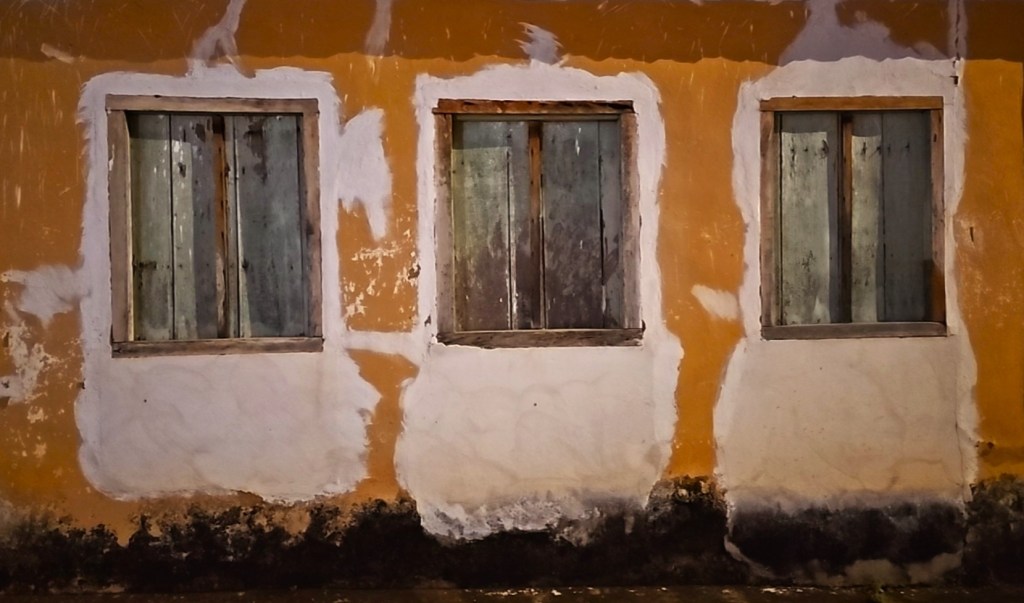
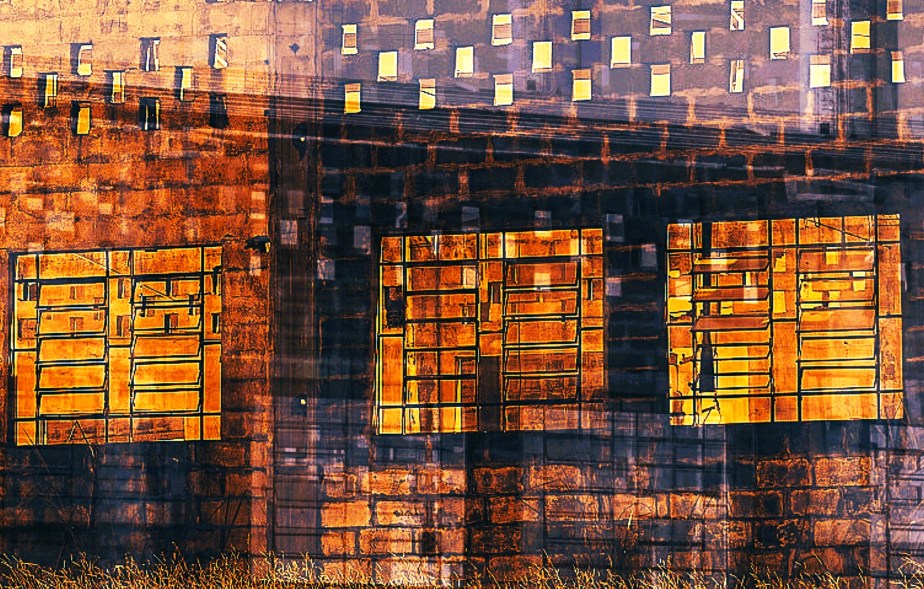
{three windows}

{three windows}

A long-abandoned old house in Cássia (Minas Gerais – Brazil).

I was happy to discover it and bring it back to life in my photo (night photo), which changed my night for the better.

I liked the title that Prof. Guilherme Ghisoni (Labfotofilo – Philosophy of Photography Research Laboratory, FAFIL-UFG, Goiás, Brazil) gave to this photo, also published on my Instagram: THE SUM OF TIMES. I found the title inspiring and it fits the photo perfectly.

This scene values ​​the aesthetics of imperfection, that is, the beauty of imperfections, thus aligning itself with the Japanese philosophy of wabi-sabi, which sees value in aging and the transience of things. Therefore, the title given, “The Sum of Times”, is very expressive, in my opinion, because it reinforces the idea that the present is built from the layers (imperfect, but beautiful) left by the past.

[red poppy of palestine]

Think of the children of Palestine, living orphans
Born orphans, with no future and nothing
Others massacred by bloodthirsty drones and missiles,
Murdered without mercy
From hunger, thirst and bullets
Think of your decapitated limbs
Their broken hearts
Wounds like red poppies
Dried, faded in a dry vase, on a table in a corner of the house
Broken
On some corner that no longer exists
Broken

Don’t forget the red poppy
From the red poppy of Palestine
The same color as spilled blood
Never forget the dried, faded red poppy
Stained with blood
Abandoned
No petals, no red
With nothing

Giacomelli once again: ‘paesaggio-agricolo’ and ‘la buona terra’

Mario Giacomelli, born in Senigallia, Italy on 08/01/1925 and died in Senigallia on 11/25/2000, was a great Italian and world photographer, but he was also a typographer and painter.

Continue reading “Giacomelli once again: ‘paesaggio-agricolo’ and ‘la buona terra’”

Me and Mr. Eggleston (and our tricycles)

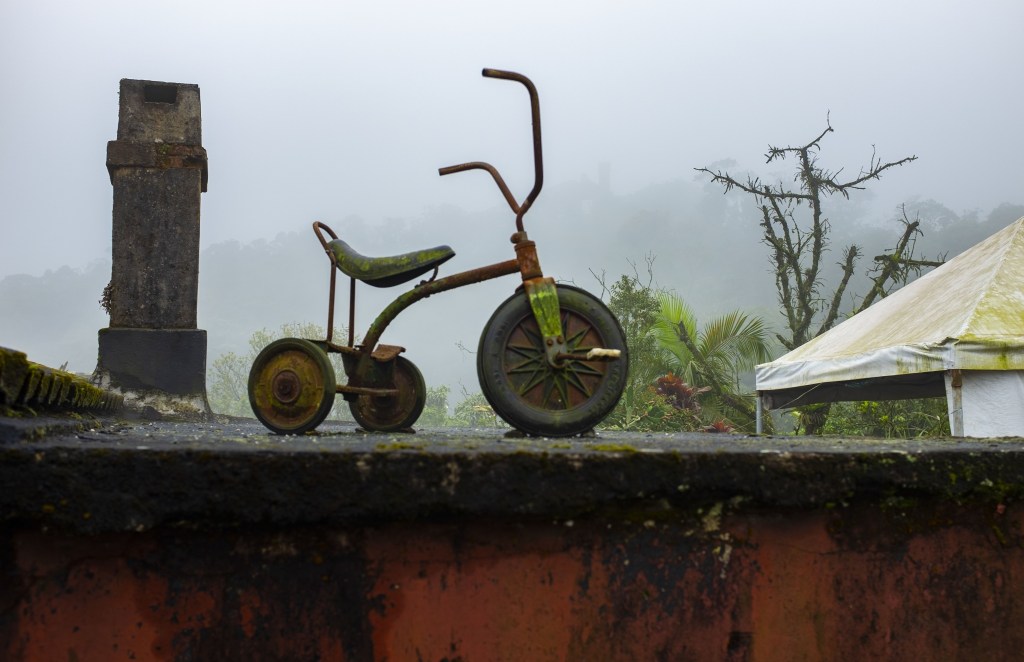
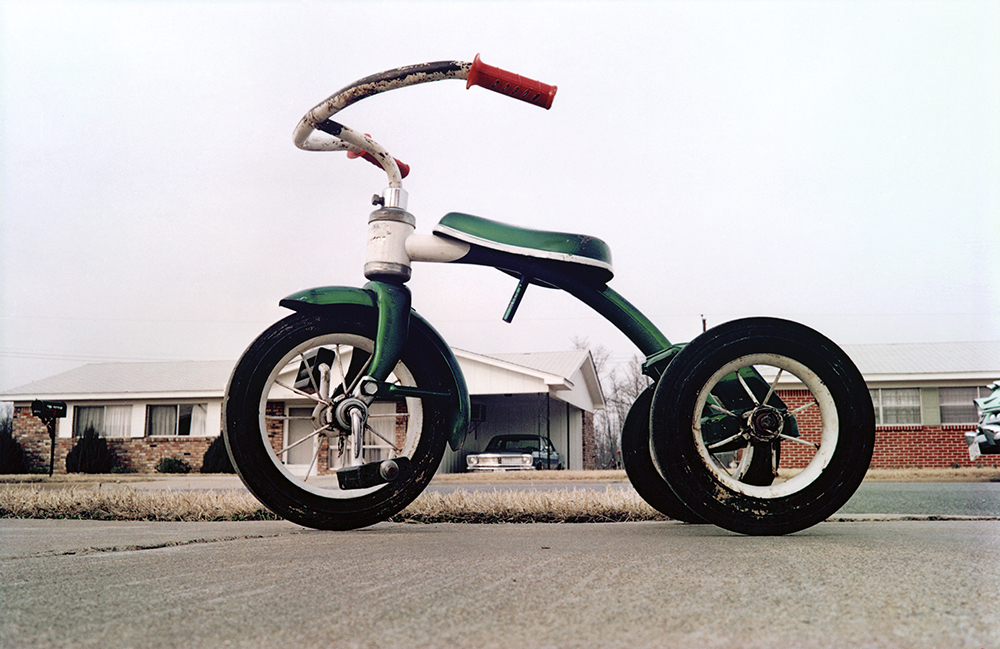
I can swear and, I believe, you are capable of not believing that in 2018 in Paranapiacaba (SP-Brazil) I took this photograph of the top of the diptych I was already aware of this iconic photo by William Eggleston (which is mentioned in the literature as “Untitled, Tricycle and Memphis, 1970”), but I did not imagine that today I would be comparing mine with his made practically from the same angle.

Observing international criticism, this lower angle gives Eggleston’s famous photo very inspired considerations like this one by Mark Feeney: “Looking up at the sky, Eggleston’s camera gives that tricycle the majesty – and ineffability – of an archangel’s throne” (William Eggleston’s Big Wheels, Smithsonian Magazine – August 2011). Feeney also notes that Eggleston’s tricycle dominates the foreground of the photo “like a chariot of very youthful gods“. And he adds: “archangels, deities: for Eggleston, the profane is what’s sacred”.

“My tricycle”. Paranapiacaba (SP), Brazil. 2018.
William Eggleston’s Tricycle. Menphis, USA. 1970.

You who are reading this text what about my tricycle? I hope you say good things since my tricycle is at a great disadvantage – to say the least – to Eggleston made in 1970. This iconic photograph was recently auctioned for just over half a million US dollars. I would be happy with good readings from my tricycle and, perhaps, a very minimal fraction – a very tinny fraction – of Eggleston’s dollars for my tricycle.

Do you want to buy it?

Why I love William Christenberry’s photographic work

I don’t know if you, like me, are fans of photography work by Stephen Shore (born 1947 in New York-USA), an American photographer famous for his photographs – as many critics say – “of objects, everyday scenes or banal, and for pioneering the use of color in artistic photography “. Without a doubt, Stephen Shore’s photographic work is really very good. But (perhaps motivated by my personal identification with the photography theme) – and as there is always a ‘but’ in life – there is in my opinion, another photographer, also American, who is also considered the pioneer of worldwide color photography called William Christenberry (born on 1936 in Tuscaloosa, Alabama and died on 2016 in Washington, DC-USA). In my opinion – that coincides with that of a large number of critics – Christenberry is as well a great master in color photography.(texto em português ao final) Continue reading “Why I love William Christenberry’s photographic work”