I'm an amateur photographer based in the city of São Carlos, São Paulo state, SE Brazil.
I used to make photographs since I was about 15-17 years old. My first camera was a Olympus Trip, an analogue camera. Many years after that I switched to several digital cameras. Presently I own a Nikon D500 with a small set of lenses and a Fujifilm X100T 23mm.
A few years after my retirement as an university professor, after teaching Environmental Chemistry at the Federal University of São Carlos (UFSCar) for 45 years, I decided to invest money and time dedicating myself more seriously to photography. I´ve taken on-line courses as well as I´ve participated to various photography festival across Brazil.
By far, my biggest interest is street photography. And in it, I'm interested in portraits, everyday street scenes and architecture.
I have no formal education in art or photography. That is why I always say I am being a photographer rather than being a photographer [by trade].
Today, I simply wanted to share one of the many things photography has taught me over the long years it has been my companion and healer: all a photographer could ever want is for some of those who appreciate their work—at least a few—to feel the same emotion, with the same intensity (or something akin to it in both respects), that the photographer felt while creating it.
I wouldn’t call this a “generous gift” from photography, though, because my own photography is the result of hard, sweaty labor. I don’t know about yours. Everyone knows where the shoe pinches.
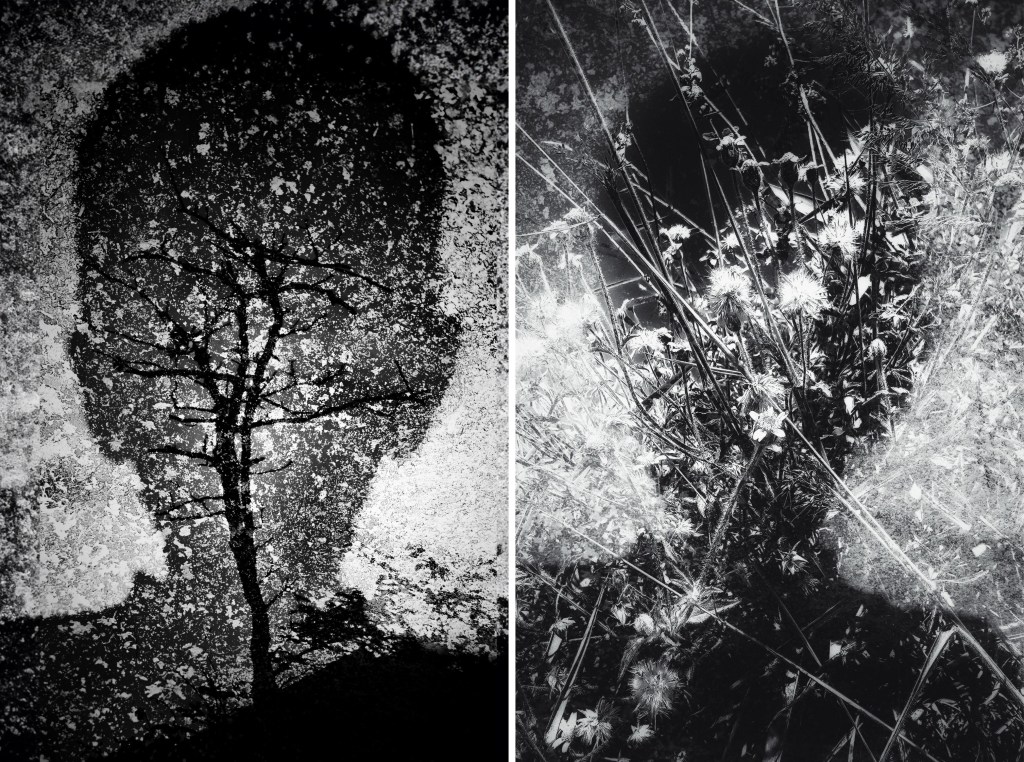
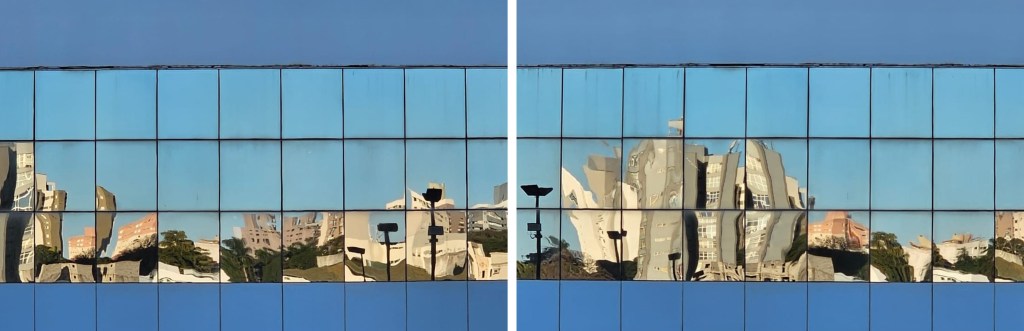
Image: an overlay of two of my photographs, edited in Snapseed.
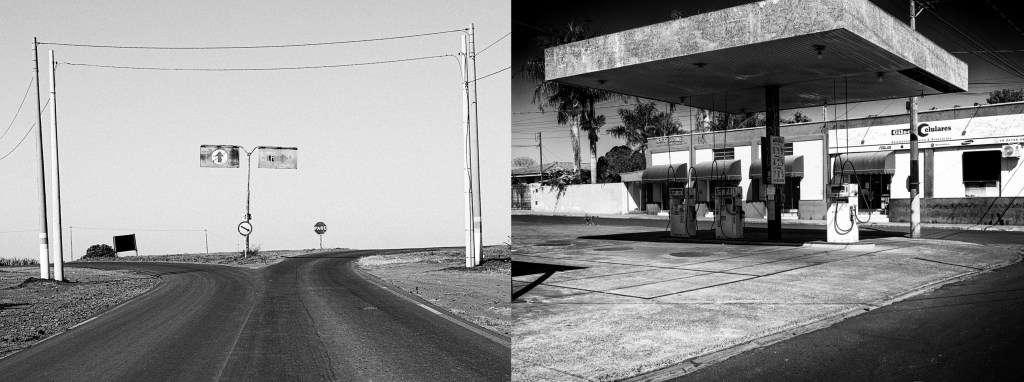
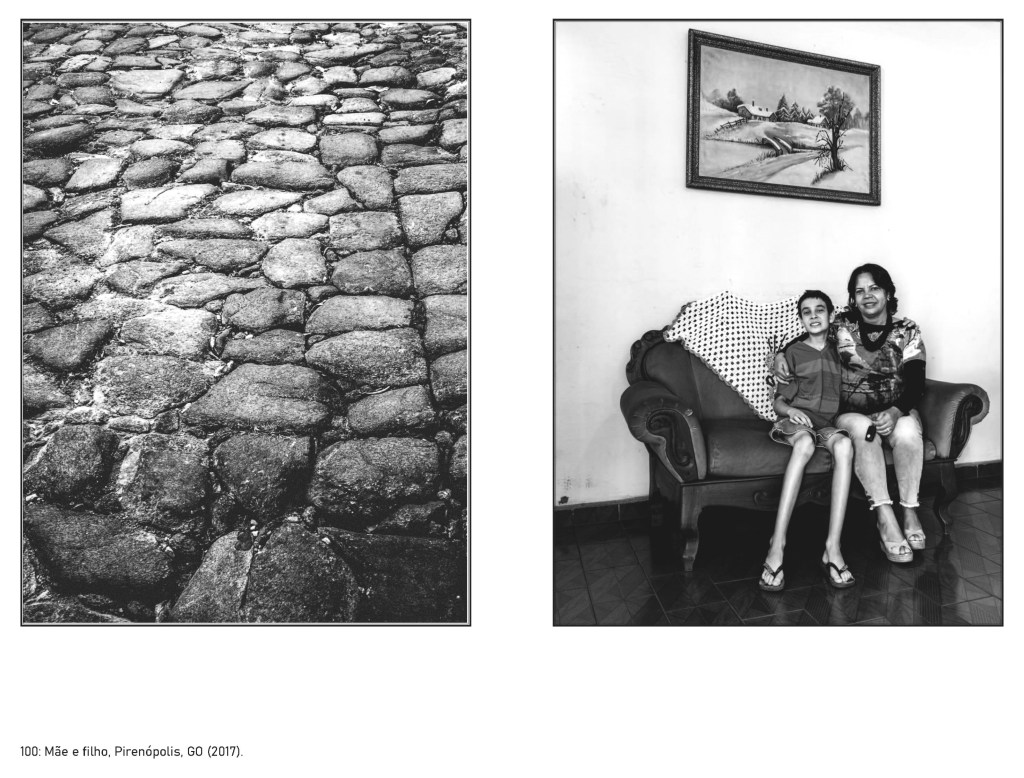
Much like Leandra (one of the most symbolic “invisible cities” imagined by Italo Calvino in his book of the same name), cities are defined not by their architecture or geography, but by the coexistence of spirits—those domestic spirits tied to the memories of families and homes, and those associated with newcomers, displacements, and transformations. Cities are also formed by layers of memory, affections, customs, and presences accumulated over time. According to Calvino, urban identity arises from this unstable balance between what endures and what transforms. …………………………. A diptych from a forthcoming photography book titled Parallel Worlds—an exploration of poetics through photographic diptychs.
For my photography projects centered on memory, territory, and the reinterpretation of landscapes, the city of Leandra offers a particularly rich interpretive key: the photographs can reveal not only what is present in the landscape but also the invisible traces of past occupations and the possibilities of futures yet to unfold. In this sense, Leandra is a city of superimposed memories and invisible presences that continue to inhabit these places, even when they can no longer be seen.
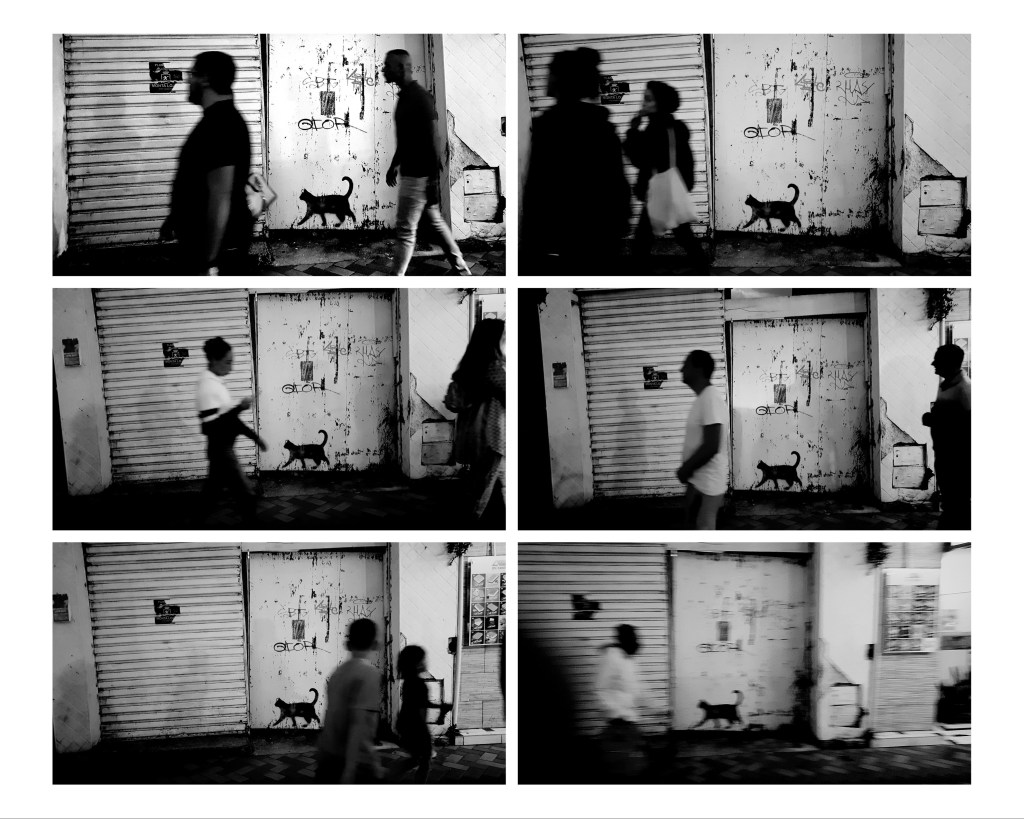
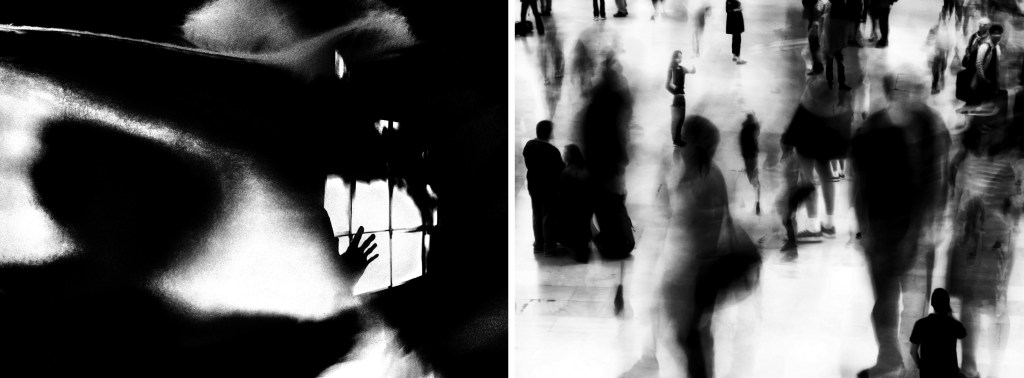
There was a city where people passed one another without ever stopping: they shared the same sidewalk, the same subway entrance, the same noises, and the same walls covered in graffiti.
Each face appeared for only an instant, like an interrupted sentence. Anyone watching that street corner for hours would believe they were seeing the same city; anyone returning days later would discover that none of the people were the same. The city existed precisely in that movement: an endless succession of encounters that never actually took place.
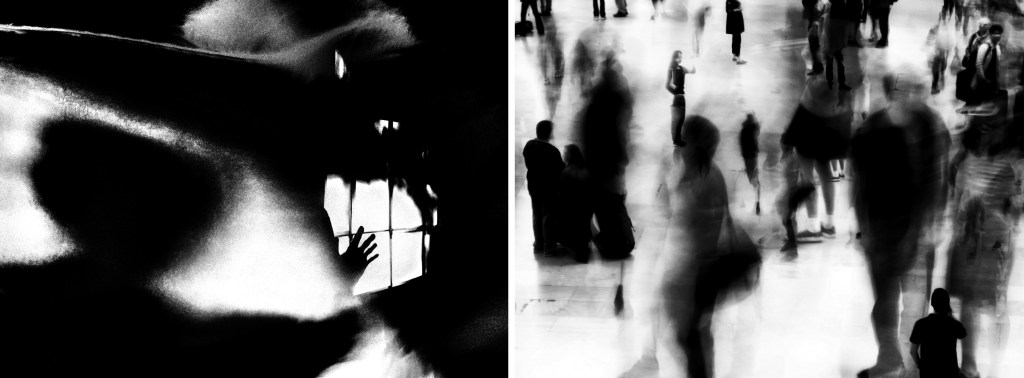
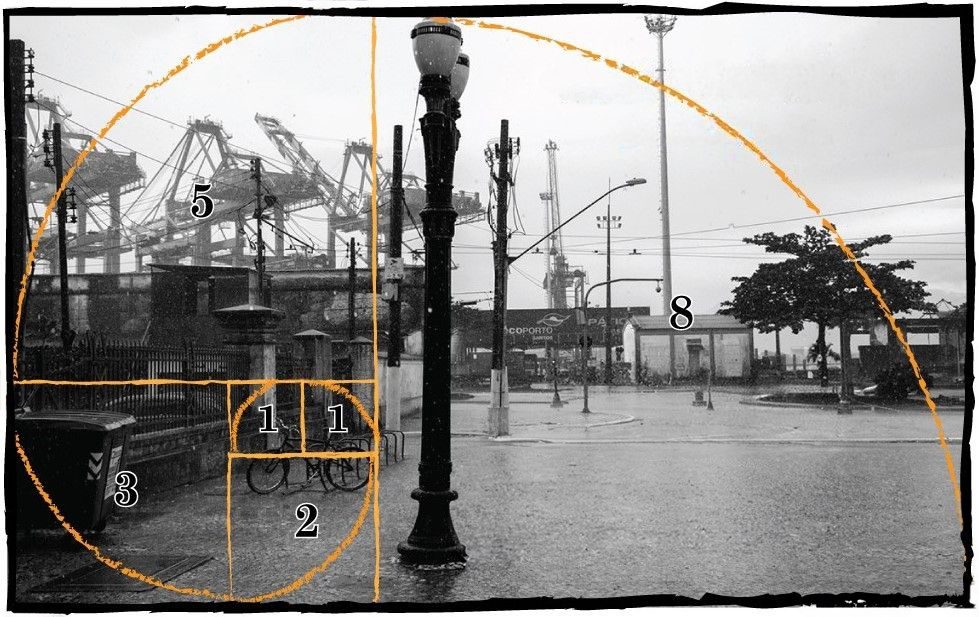
The invisible city lies not in the architecture or the graffiti, but in the fleeting flow of possible connections. …………………………………. (inspiration: Italo Calvino’s Invisible Cities) photos: polyptych featuring 8 street photos, NYC, 2017
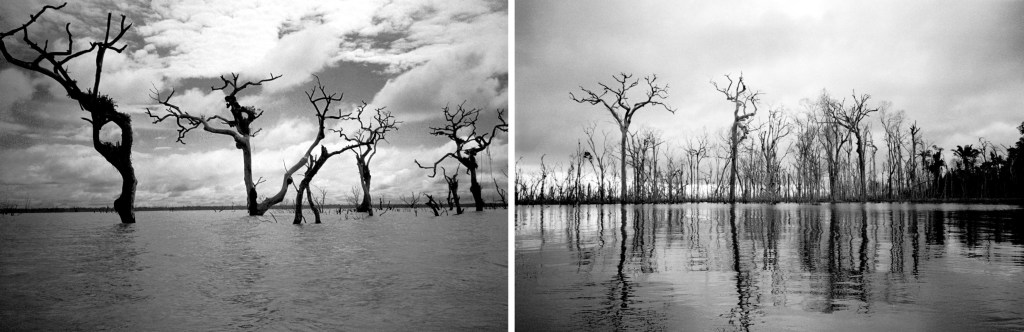
No territory is defined solely by what we see in the present. Its landscape retains traces of past uses, distinct forms of occupation, and vestiges of other eras.
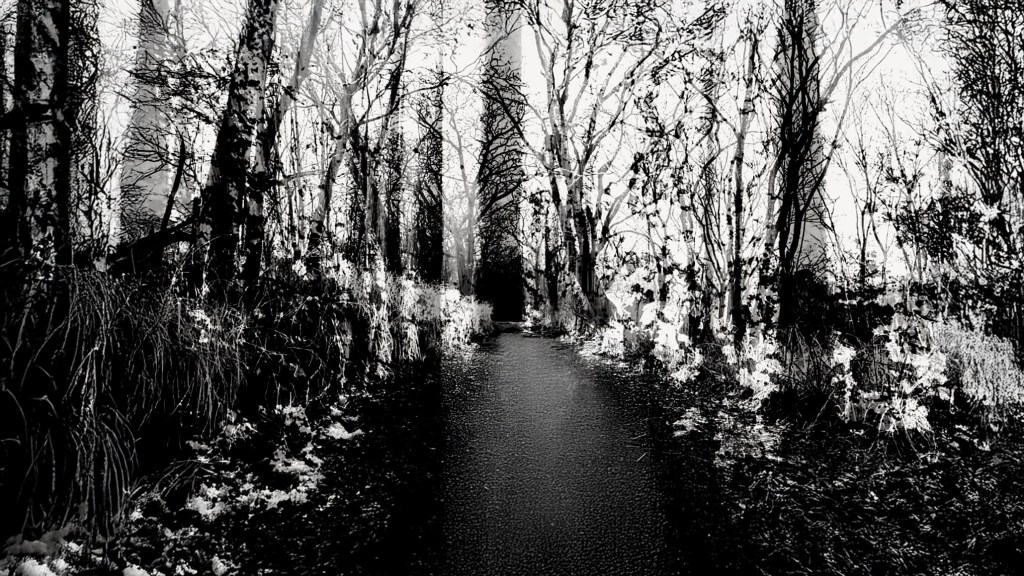
In this place, two memories coexist within the same scene. Brick structures bear witness to the labor, machinery, and people that transformed the material world over the years. Meanwhile, the forest’s reflection in the water reveals another layer of the landscape; trees, branches, and roots evoke a time defined by natural cycles.
These two presences do not cancel each other out. The industrial landscape and the forest reflect different moments in the territory’s history. Together, they demonstrate that a place holds multiple layers of memory. What we see today is the result of the interplay between nature, human activity, and the passage of time.
Nothing stands the test of time. The walls and roof of a house that once served as shelter and home to a family who lived there have nothing left to protect. All that remains is emptiness; loneliness; isolation; abandonment. It is lost in space and time. Seeing it, I wondered: who were its inhabitants? What became of them? Where are the people who gave it life today? Where and at what ages are the children who this house likely saw born and raised? Many dreams were dreamed there. Many plans for the future were made there. I don’t have answers to these questions, but that doesn’t stop me from speculating about all that may have happened in the past, within these four walls and under this roof. Today, it represents only a shadow in the anthropized landscape of a sugarcane field, so typical of the interior of the state of São Paulo, where I was born, raised, and where I live. When I was a boy, I believe the word and meaning of agribusiness had not been created in this country—agribusinesses that could and should be far more sustainable than they are. This house, today, embodies the practical meaning of the transitory nature of our lives, of our world(s), and of how things inevitably change over time. Today, it is an element of the landscape that is nothing more than a testament to the concept of resilience in its figurative and most painful sense: its ability to recover or adapt to misfortune or change. It is today a testament to the passage of time, to the entropy of oxidation and deterioration of the materials it was once built upon. They insist on remaining standing. They stand there, motionless, before me. The images of these houses captured through the lenses of my cameras show not only the very object that the houses still are, but also the time of life and the time lived, and the memories of the people who once lived in them. They show the sum of time.