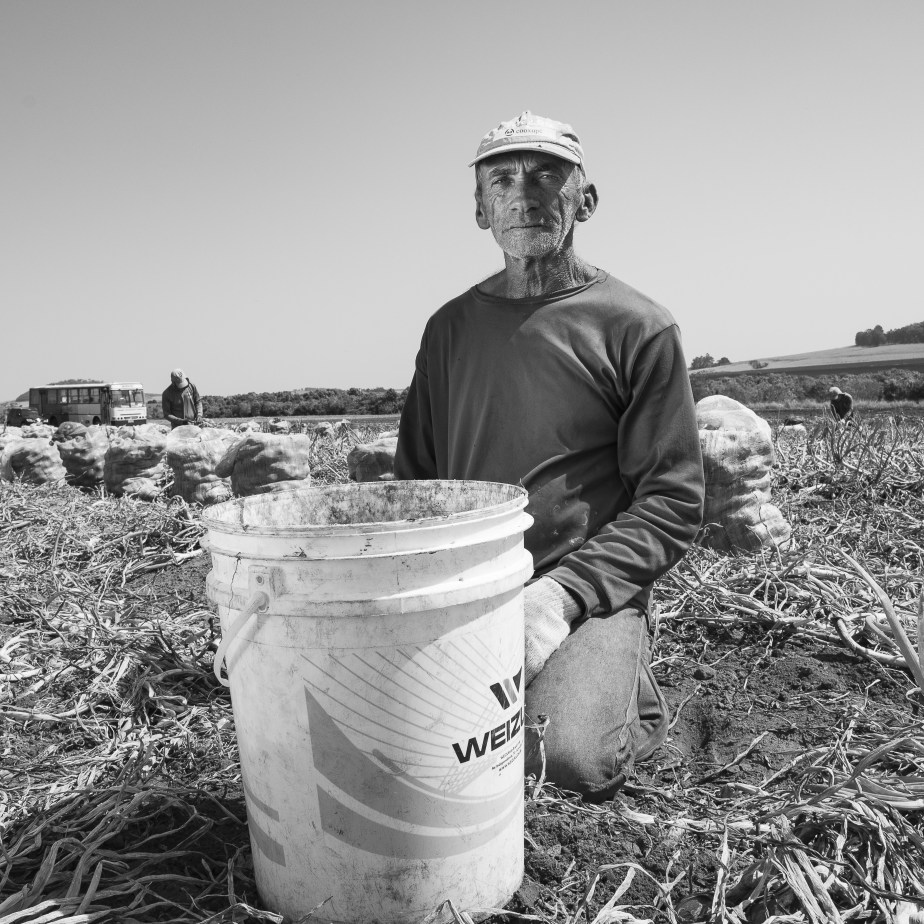
Me and Mr. Strand.


In the book “Understanding a photograph” by John Berger (organization and introduction by Geoff Dyer and translation by Paulo Geiger) (Cia das Letras. São Paulo. 2017) (an authentic treatise on photography made known by master Juan Esteves, São Paulo) I read and reread it a few times (good things have to be tasted homeopathically) the ‘reading’ of the photo on the left of 1944 (made three years before this writter was born) by Paul Strand in Vermont, New England-USA, and the that you can read there with all the letters impresses me, touches me a lot.

Berger says of Strand’s work: “His best photographs are unusually dense – not in the sense of being overloaded or obscure, but in the sense that they are filled with an unusual amount of substance per square centimeter. And all this substance becomes the essence of the object’s life. Take the famous portrait of Mr. Bennet. His jacket, his shirt, his beard on his chin, the wood of the house behind him, the air around him become, in this image, the very face of his life, of which his facial expression is the concentrated spirit”.
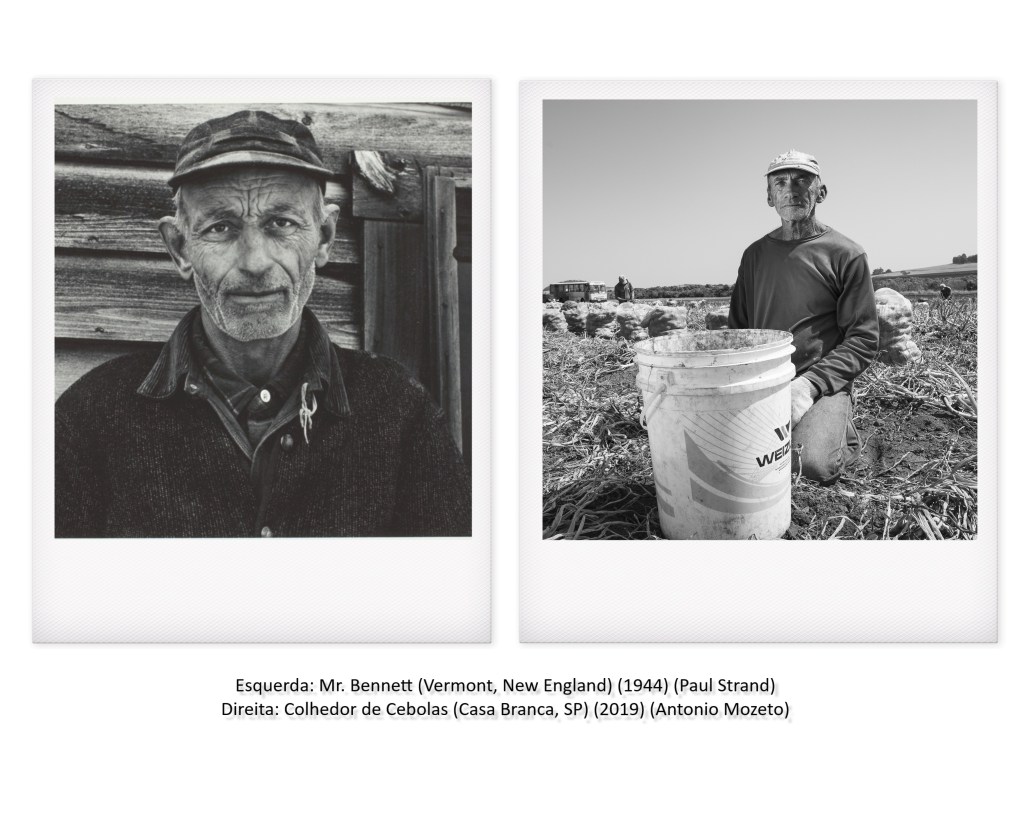
Left: Mr. Bennett (Vermont, New England-USA) (1944) by Paul Strand.

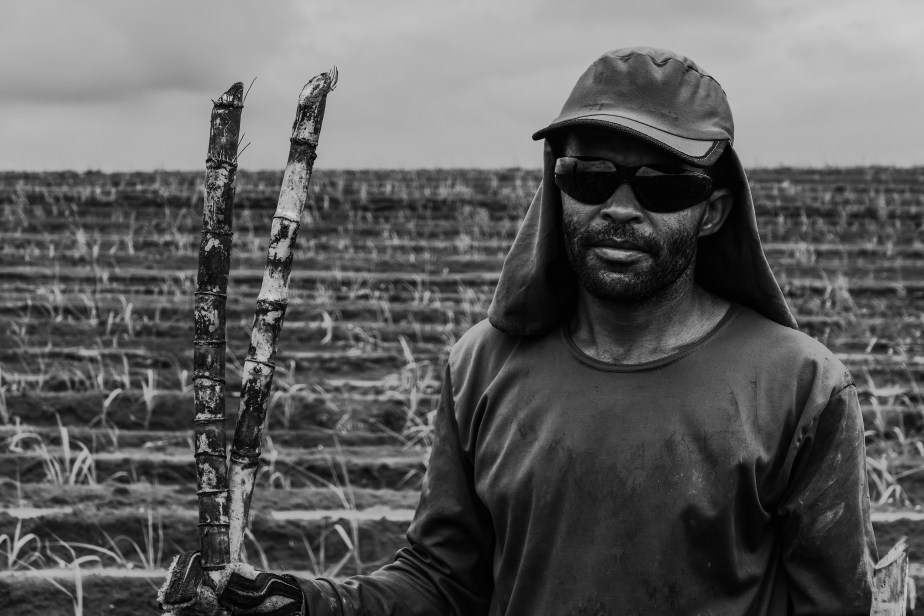
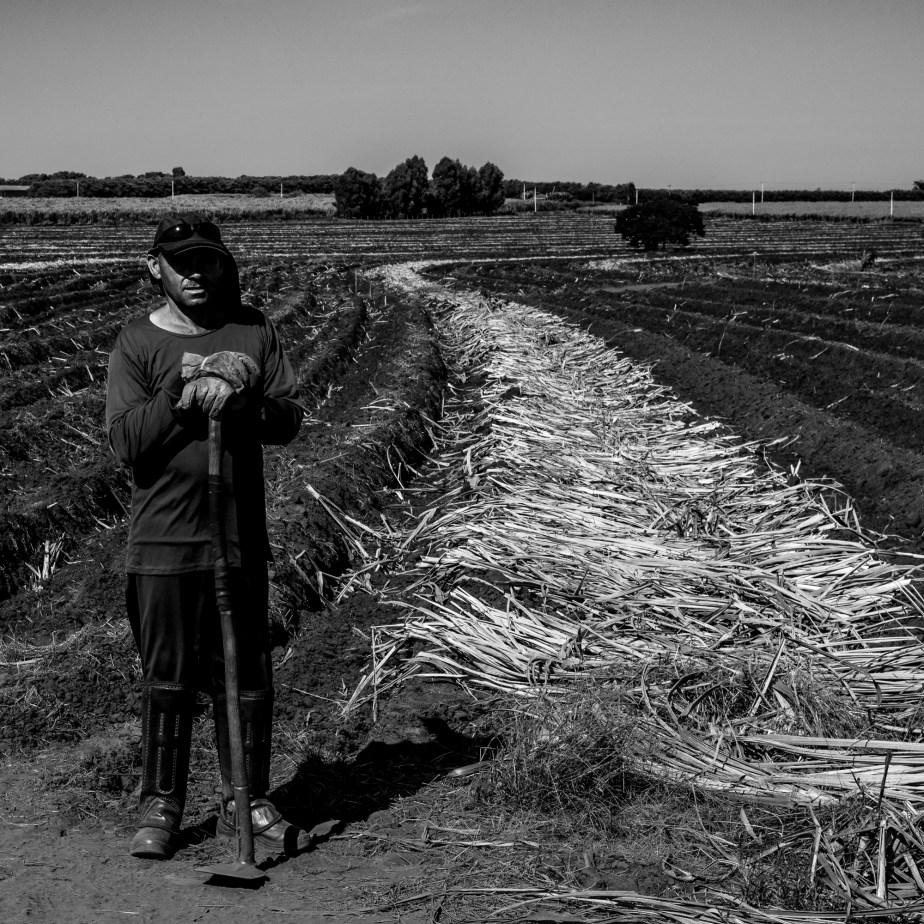
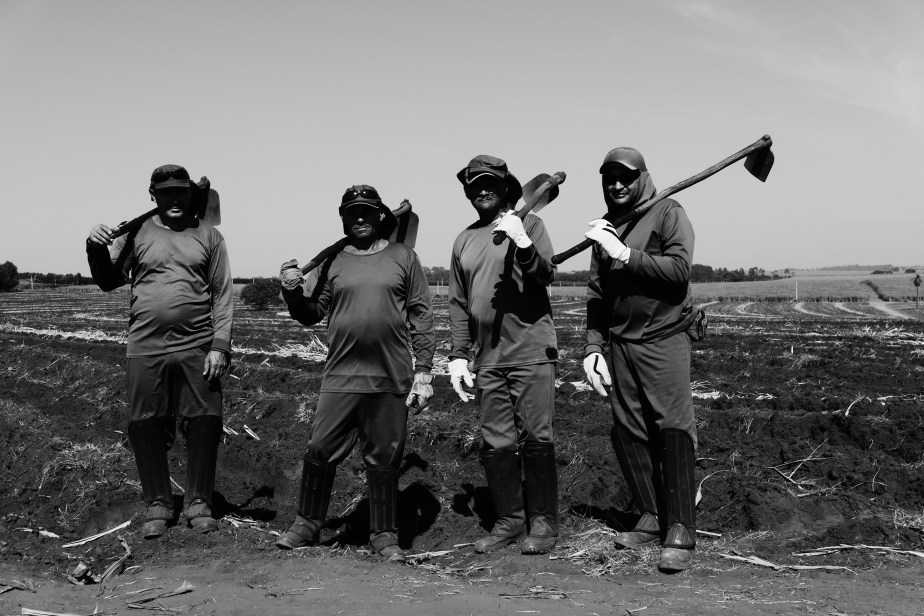
Right: Onion harvester (Casa Branca, SP-Brasil) (2019) Antonio Mozeto.

The photo on the right that I took in 2019 of an onion harvester in Casa Branca (SP-Brazil) has a much more explicit surface given that the worker is in his own working environment. And, without due permission, but with due boldness, ‘reading’ my photo, I make Berger’s words about the current Paul Strand photo mine: all the substance of the photo is in the expressive look of the worker, in a marked face due to the hardships of hard work and the properties of his surroundings: the harsh and striking light of the day in full sun, the onion harvesting bucket, the onion sacks lined up behind him, two companions of toil and the bus that brings him a lot early for the harvest and takes you home at the end of another day of this person’s hard daily workday.

As Berger rightly said (operate citato) “in the relationship between photography and words, the first yearns for an interpretation, and words usually supply it. The photograph, irrefutable as evidence, but weak in meaning, gains meaning from words”.
Emparelhamento palavra-fotografia (Word-photography pairing)

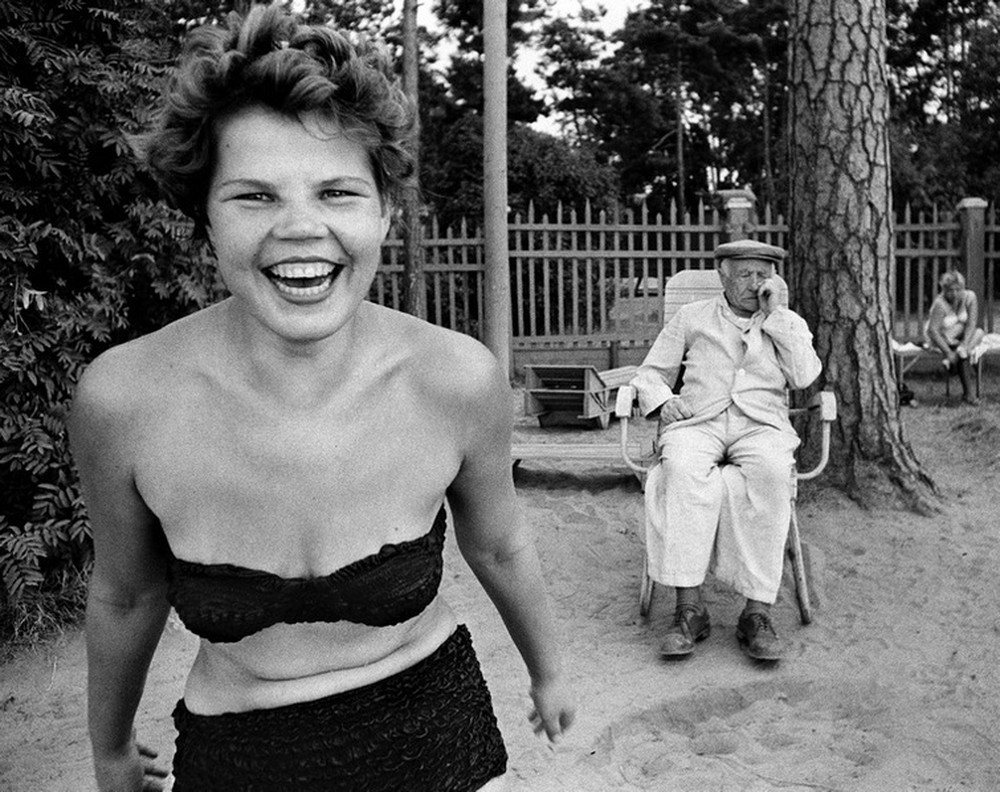
Bikini. Moscow William Klein. 1959.

Inspirado num artigo escrito por Geoff Dyer chamado ‘forma: palavra + fotografia’ e publicado pela revista Zum em maio de 2014 encontrei ressonância para um aspecto de grande relevância para mim na fotografia que é ‘casamento da palavra com a fotografia’ ou da ‘fotografia com a palavra’. Para mim muitas vezes há, aí, um intercâmbio de papéis, i.e., de quem nasceu primeiro, como a história: ‘o ovo ou a galinha?’: ‘a palavra ou a fotografia?’.
Dyer cita alguns livros que historicamente encaixam-se nesta categoria e após ler seu artigo fiquei tentado em comprar um deles e acabei comprando o ‘Looking at photographs’ onde John Szarkowski ‘casa’ 100 fotografias do acervo do Museu de Arte Moderna de Nova York (as mais icônicas em sua perspectiva no ano de 1973, é lógico) com ‘palavras’ sobre tais fotos. Apesar de ter nas mãos o livro menos de 24 horas, já pude perceber verdadeiras joias – tanto ‘joias-palavras’ como ‘joias-fotografias’ – que há no mesmo.
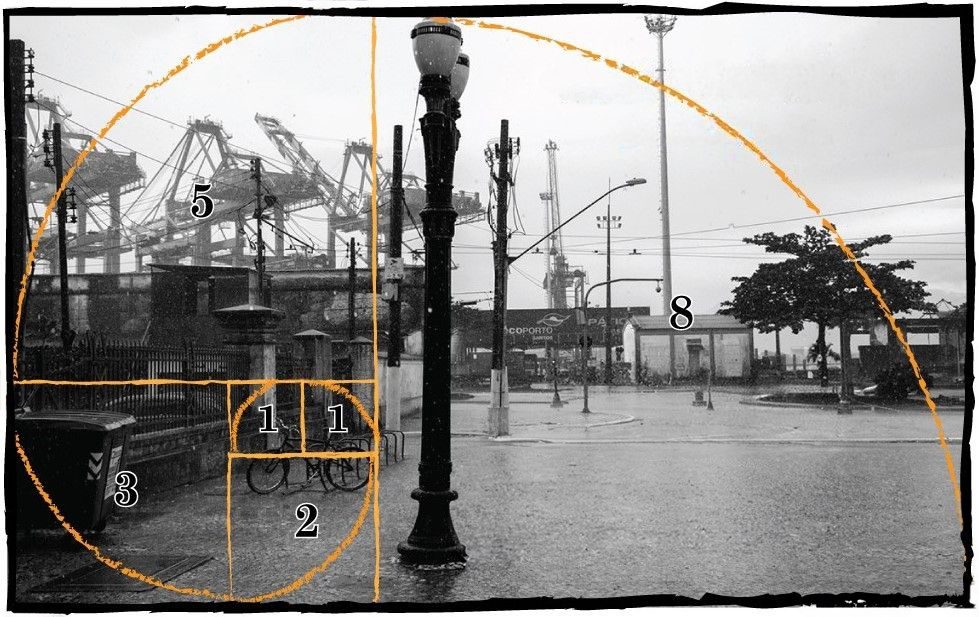
Uma dessas preciosidades é uma foto de William Klein feita em Moscow em 1959 que o livro do Szarkowski não dá o nome (que mancada Szarkowski!), mas eu sei que é ‘bikini’ porque é capa de um Photofile (Thames & Hudson, 2017) do Klein que tenho em minha pequena biblioteca. “Bikini’ foge – no meu modesto conhecimento e entendimento da obra de Klein – da ‘regra’ das (quase totalidade) fotografias desse autor que prima por ‘meter’ dentro do retângulo grande diversidade de elementos de composição. ‘Bikini’ tem 6 camadas ou planos lindamente definidos….e, muitos mistérios…tensões…e, poesia.
Pois é: entre as várias coisas que o Szarkowski fala dessa fotografia leio algo que quero compartilhar:


“It was recognized long ago that so-called good photographic technique did not invariably make the best picture. Sometimes the gritty, graphic simplicity of the badly made photograph had about it an expressive authority that seemed to fit the subject better than the smooth, plastic description of the classical fine print”.

Mandou bem Szarkowski…


Word-photography pairing
Inspired by an article written by Geoff Dyer called ‘form: word + photography’ and published by Zum magazine in May 2014, I found resonance for an aspect of great relevance for me in photography that is ‘marriage of the word with the photograph’ or ‘photography’ with the word’. For me, there is often an exchange of roles, i.e., who was born first, like the story: ‘the egg or the chicken?’: ‘The word or the photo?’.


Dyer cites some books that historically fall into this category and after reading his article I was tempted to buy one and ended up buying the ‘Looking at photographs’ where John Szarkowski ‘houses’ 100 photographs from the collection of the Museum of Modern Art in New York ( the most iconic in his perspective in 1973, of course) with ‘words’ about such photos. Despite having the book in my hands for less than 24 hours, I was able to perceive real jewels – both ‘jewels-words’ and ‘jewels-photographs’ – that are in it.


One of these gems is a photo by William Klein made in Moscow in 1959 that Szarkowski’s book does not give the name (what a mistake Szarkowski!), But I know it’s a bikini because it’s the cover of a Photofile (Thames & Hudson, 2017) from Klein that I have in my small library. “Bikini” escapes – in my modest knowledge and understanding of Klein’s work – from the ‘rule’ of (almost all) photographs by this author who excels in ‘meter’ within the rectangle, a great diversity of elements of composition. ‘Bikini’ has 6 layers or beautifully defined plans …. and, many mysteries … tensions … and, poetry.


Well, among the many things that Szarkowski talks about in this photograph, I read something I want to share:


“It was recognized long ago that so-called good photographic technique did not invariably make the best picture. Sometimes the gritty, graphic simplicity of the badly made photograph had about it an expressive authority that seemed to fit the subject better than the smooth, plastic description of the classical fine print ”.

You did well Szarkowski!!! …

The power of photography: time, ephemerality and memory

Oh !, time … time, that damn-blessed inexorable variable … inevitable, unshakable, inflexible, relentless, unspeakable variable … the time that denies everything and erases everything … the time that yellow the love letter leaf kept so long in a drawer … forgotten there, but not from time, to time … time that wears out love … time that soothes passions and brings loneliness … time for a utopian world … and, at the same time, a dystopian world … time that everything weathered and destroyed the beauty and perfection of the beautiful … that appeased, that ended wars … that ended everything, from manias to epidemics and pandemics, that calmed the gusts … that the flower withers, rots the fruit and soothes the pain … which creates unrest and brings fear … Continue reading “The power of photography: time, ephemerality and memory”

In honor of film photography

After more than 30 years I am returning to film photography. I do not know if it is to stay, but I am back … I have the impression that it will live well with my digital photography that I have been practicing for some 20 years. Continue reading “In honor of film photography”

In praise of black and white photography

There are many phrases already spoken about black and white photography, but this one by Robert Frank summarizes and symbolizes everything for me:
“Black and white are the colors of photography, which symbolize the alternatives of hope and despair to which mankind is forever subjected.” Continue reading “In praise of black and white photography”

‘Time and Patience’ (José Saramago)

“If anyone asks me what time is, I immediately declare my ignorance: I do not know. I hear the beating of the pendulum clock right now, and the answer seems to be there. And if the mirror shows me that I am not who I was a year ago, it will not tell me what the time is. Just what time does.” (José Saramago) Continue reading “‘Time and Patience’ (José Saramago)”