{photography book Hauntings: SALE}

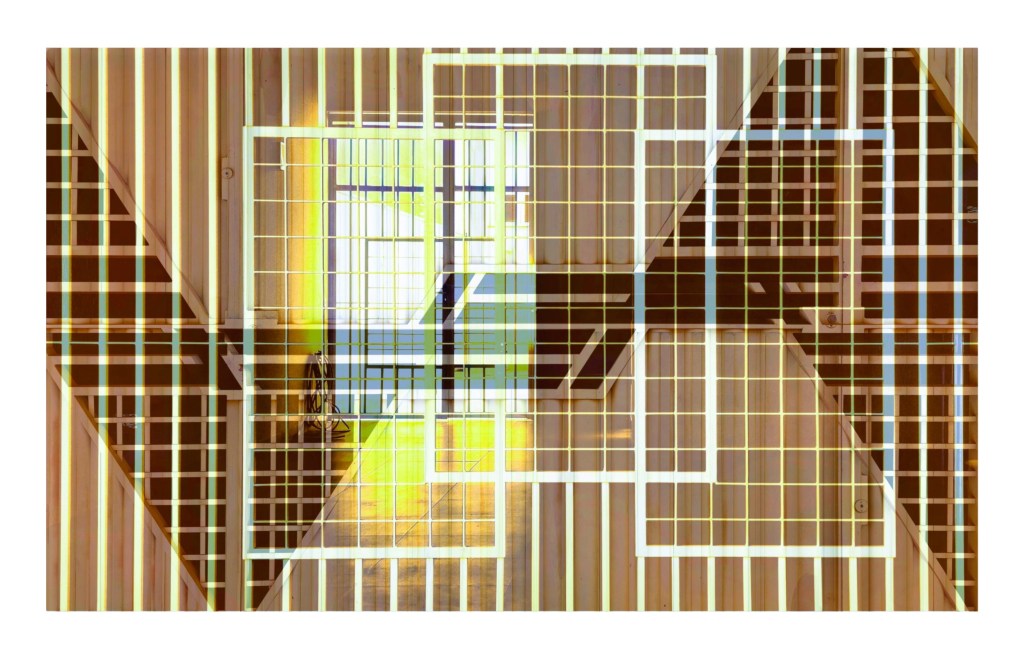
It is with great pleasure that I announce the launch and sale of my photography book HAUNTINGS (ASSOMBRAÇÕES) bilingual: Portuguese & English) – an independent production by me in partnership and curated by Roberto Cecato / Studio Imaginar (FotoWeb Academy, São Paulo, SP-Brazil) – which, based on the link in my LI (integrated store), can be, from now on, purchased for a short period as part of a launch offer (see the link below).

For almost 2 years this project was built and properly managed, matured, going through several stages that only those who have already published a book (and even independently) know what it means (a lot of sweat, but also a lot of satisfaction and growth as a photographer and person).

The final result is now public for anyone who wants to appreciate it.

https://antonio-a-mozeto.lojaintegrada.com.br/livro-de-fotografia-assombracoes-2023

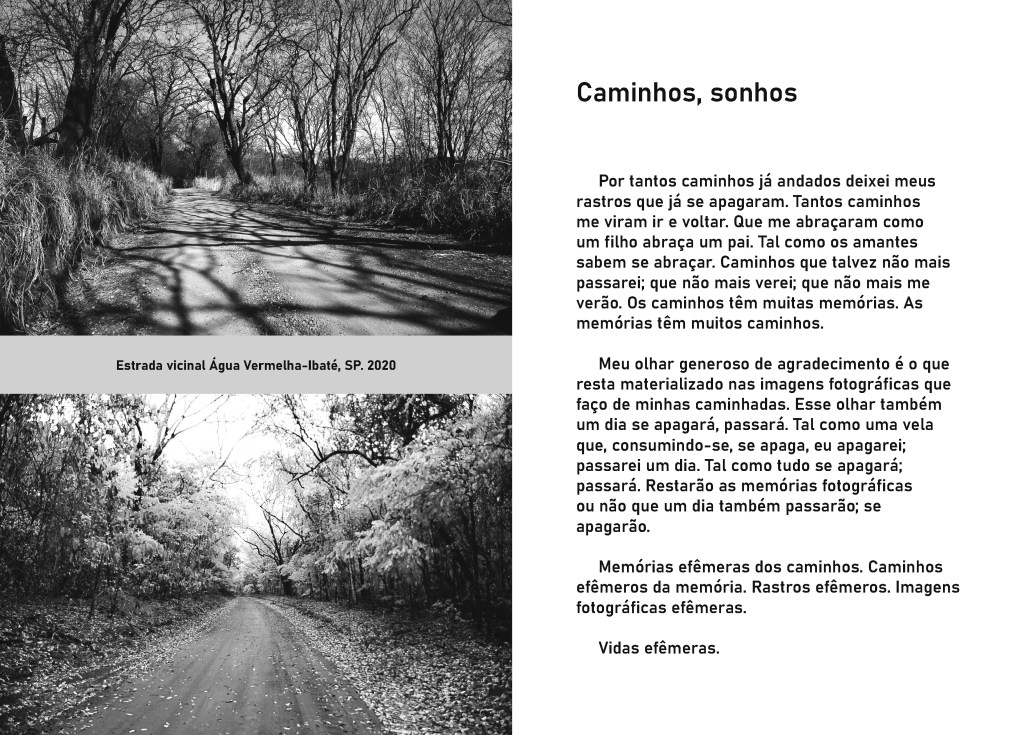
Paths, dreams

Paths, dreams

I left my footprints on so many paths that have already been erased. So many paths have seen me go and come back. Who hugged me like a son hugs a father. Just like lovers know how to hug each other. Paths that I may never take again; that I will no longer see; that they will no longer see me. The paths have many memories. Memories have many paths.

My generous look of gratitude is what remains materialized in the photographic images I take of my walks. That look will also one day disappear; it will pass. Just like a candle that, when consumed, goes out, one day I will pass. Just like everything in life will fade away; it will pass. Photographic memories will also one day fade and also pass away.

Ephemeral memories of the paths. Ephemeral paths of memory. Ephemeral traces. Ephemeral photographic images.

Ephemeral lives.

{my pittoresca Amazon}

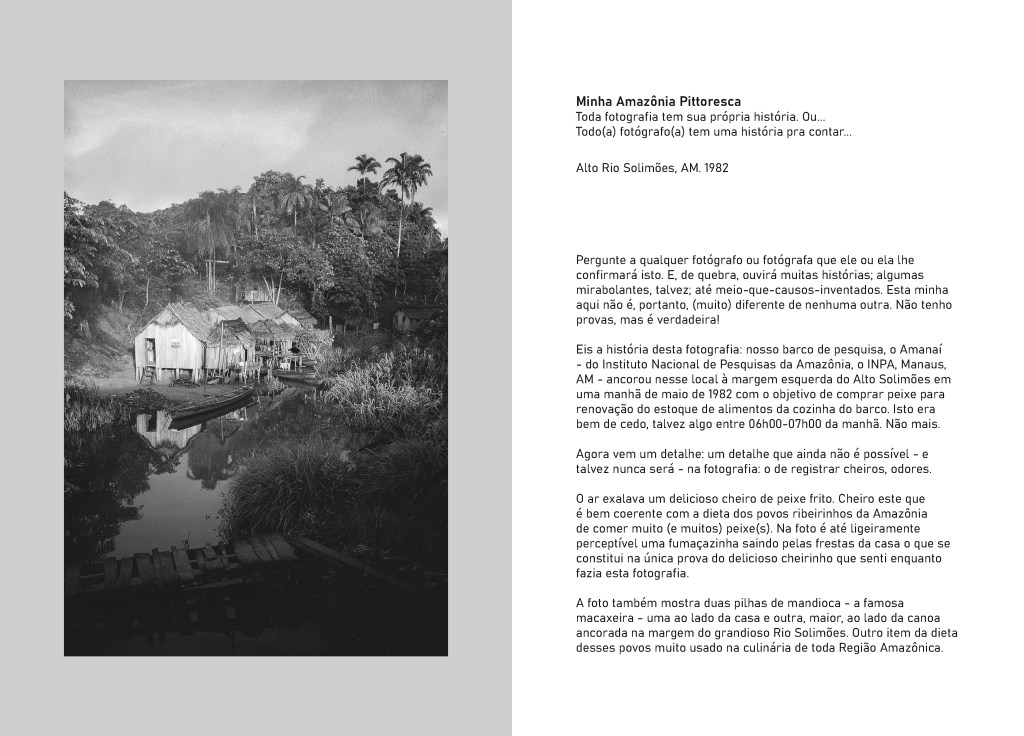
from the project: “My Pittoresca Amazon”

Every photographs has its own story. Or: every photographer has a story to tell.

Ask any photographer and he or she will confirm this. And, as a bonus, you will hear many stories; some amazing ones, perhaps; even half-made-up stories. This one of mine is, therefore, not (much) different from any other. I have no proof, but it’s true!

Here is the story of this photograph: our research boat, the Amanaí – from the National Institute for Amazonian Research, INPA, Manaus, AM – anchored in this location on the left bank of the Alto Solimões on a morning in May 1982 with the aim of purchasing fish to renew the food stock in the boat’s kitchen. This was very early, maybe somewhere between 6:00 and 7:00 in the morning. No more.

Now comes a detail: a detail that is not yet possible – and perhaps never will be – in photography: recording smells, odors. The air gave off a delicious smell of fried fish. This smell is very consistent with the diet of the riverside people of the Amazon of eating a lot of fish. In the photo, a little smoke is even slightly noticeable coming out through the cracks in the house, which is the only proof of the delicious smell I smelled while taking this photo.

The photo also shows two piles of cassava – the famous cassava tree here In Brasil – one next to the house and another, larger one, next to the canoe anchored on the bank of the mighty Solimões River. Another item in the diet of these people, widely used in cuisine throughout the Amazon region.

My Pittoresca Amazon

of the project: My Pittoresca Amazon

(a project that is becoming an exhibition already scheduled for March/2024 in Ouro Preto, MG-Brazil and perhaps a book as well)

I have a deep identification with the Brazilian Amazon, which I have visited many times for environmental work in my almost 50 years as a professor/researcher at UFSCar.
The two photos presented here are a small but representative sample of my adventures in the region.
The name of the series was inspired by the term picturesque, which is an aesthetic concept that refers to the subjective impressions triggered by the contemplation of a landscape scene in relation to painting. It emerged as an intermediary between the ideas of the sublime and the beautiful, during the development of Romanticism (late 18th century/early 19th century). The word derives from the Italian pittoresco, “resembling or made like a painting” (Wikipedia).