Irreparabile Tempus(*)
(on the impossibility of reversing time and decline)
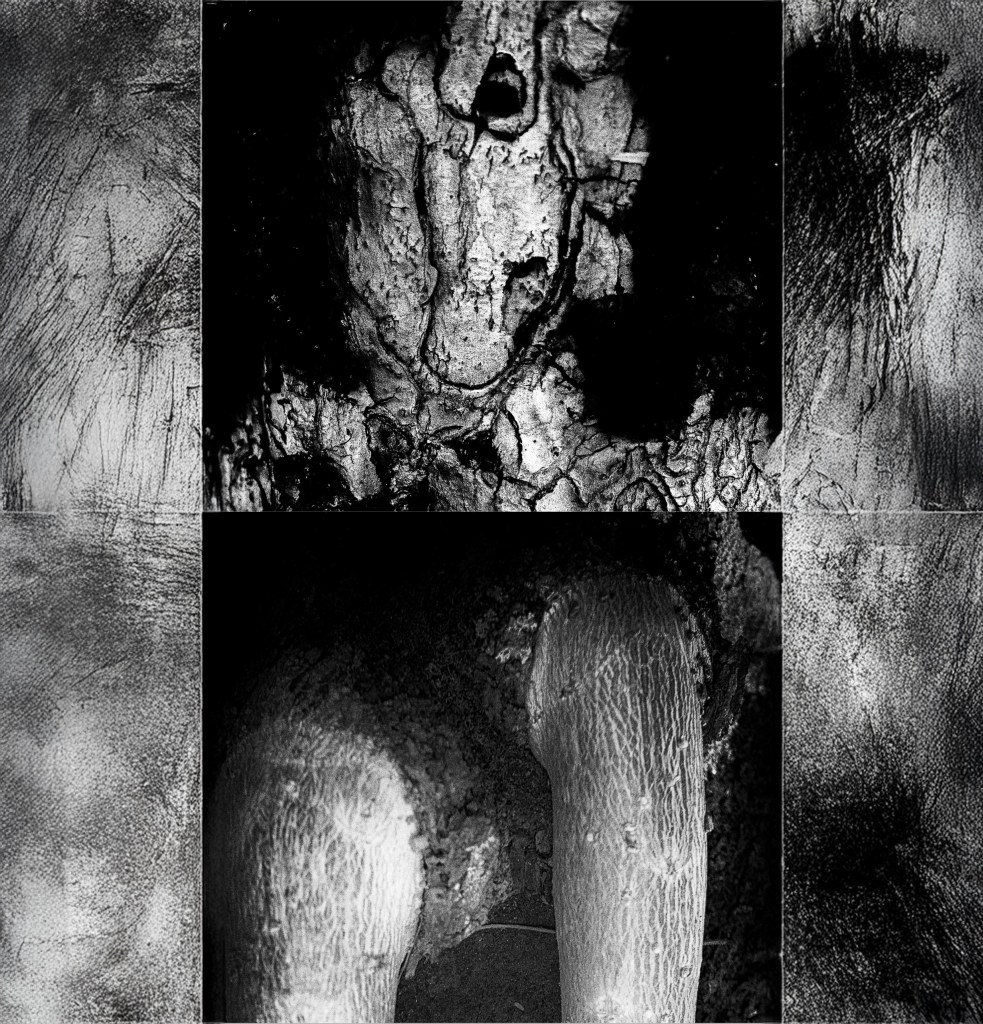
In this diptych, the aged bark of a tree transforms into flesh to enact the very concept of tempus fugit—time’s flight.
In a visceral autopsy of existence, the upper image petrifies the mind into a face contorted in agony, while the lower image shows a pair of worn-out legs buckling under the weight of gravity.
Enveloped in the pitch-black darkness of a tenebrism inherited from the Baroque, the work strips away our illusions of eternity and returns us to the state of a still life: fragile matter that cracks, dries, and dissolves into the oblivion of the earth.
(*) Classical origin: The phrase first appeared in the poem Georgics (Book III, line 284) by the Roman poet Virgil, in its full form: “Sed fugit interea fugit irreparabile tempus” (“But meanwhile, time flees—irreparably, time flees”).
Publius Vergilius Maro (70 BC – 19 BC) was one of the greatest poets of Ancient Rome, a leading figure in Latin literature during the reign of the Emperor Augustus.


Fascinating. See the seeds of time!
LikeLike
Thank you, Geoff!
Thank you so much, as always, for your insightful and beautiful comments. I haven’t watched the film The Seeds of Time yet… but I’ve just discovered that it’s available on Prime Video here in Brazil.
LikeLike