[Trajectory and belonging]
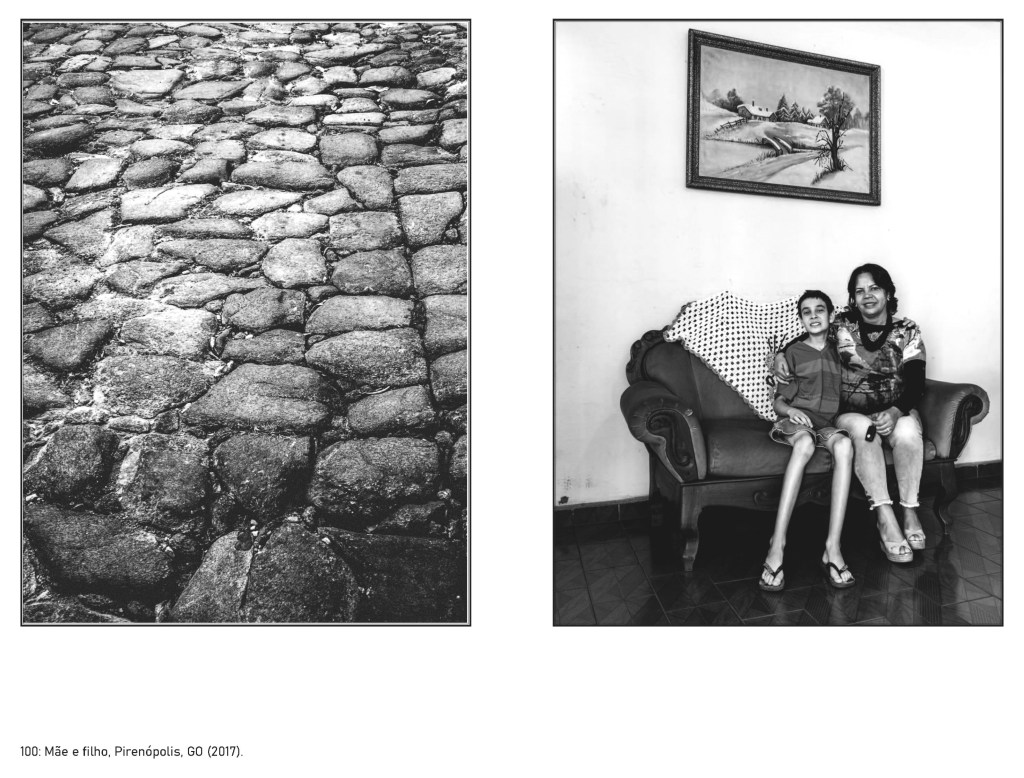
The stones seem to hold the echo of ancient footsteps. Mother and son, in turn, give substance to what time has not erased. Between them, the diptych bridges memory and presence, suggesting that a place is preserved not only in its physical forms but also in the people who continue to inhabit and reinvent it.
The diptych resonates particularly with certain cities in Italo Calvino’s *Invisible Cities*—places where identity is defined not by architecture but by memory, human relationships, and the persistence of time—especially Zaira, the city that “does not tell its past, but contains it.”
In Zaira, memory is inscribed in the streets, corners, walls, and objects, as well as in the stories and experiences of its inhabitants. The idea that “the path remains in the stones” speaks directly to this notion of a city that accumulates traces of the lives that have passed through it.
Cities are made less of stone than of the relationships, memories, and desires layered upon them (I. Calvino)


Interesting connections.
LikeLiked by 1 person
Thanks, Geoff!
LikeLike